Create your account
Use your own email address and confirm it through the verification message.
 LingoLabLSA GLOBAL
Discover the exam families for this language. Each pathway keeps its own format and assessment rules.
 Deutsch
Choose this language and examination in your account. The plans below show public test availability; tests assigned to you appear in your candidate dashboard. A preparation guide does not grant test access.
Exam families have their own formats, skills and scoring rules. Explore the pathway and consult the official provider.
Choose the certificate and level that fit your German learning goal.
Explore this exam GermanExplore the academic German examination and its specific task formats.
Explore this exam GermanSelect a German qualification for your personal, study or professional goal.
Explore this examUse the skills relevant to your chosen examination. The language of the questions stays separate from your interface language.
Use your own email address and confirm it through the verification message.
Open the available preparation plans and choose the access that suits you.
Take a test from your dashboard, review your results and manage your assessment history.
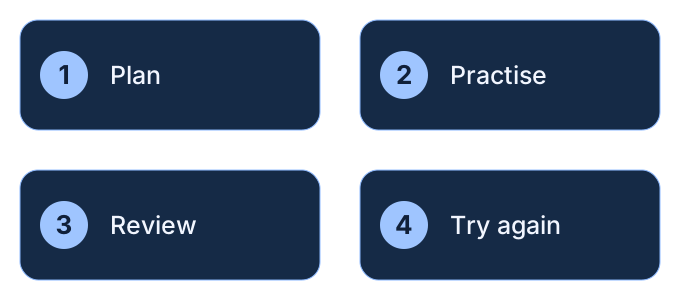
Before building a study plan, identify the exact examination, level and version you need. Read the current information from the official provider, including the skills assessed and the way results are reported. Write down your own target and compare it with the description of the test. A similarly named examination can use a different format; preparation should follow your chosen version.
Build short, regular study sessions around the tasks in your chosen exam. For receptive skills, check why an answer is correct and identify the words or ideas you missed. For productive tasks, practise planning a response before writing or speaking. Use the relevant official task instructions and marking criteria. Keep language practice separate from learning the digital controls so that both become familiar.
After a practice session, note one strength, one recurring difficulty and one specific action for the next session. Where an assessment is available, read the feedback alongside the original task and your response. Preparation results help you plan further study; they are not an official examination result. Keep useful records for comparison, and archive older work when it no longer belongs in your active dashboard.
Make German exam preparation a sequence of decisions you can act on. Start with the reason you need the language, identify the examination that fits that purpose, and build practice around its instructions. This guide helps you organise independent study and use the LingoLab catalogue. Read the availability notice before choosing access: an information page introduces a pathway, while a published test gives you an assessment to complete.
The German department distinguishes Goethe-Zertifikat, TestDaF and telc Deutsch pathways. Choose the named examination and level before working with a task format. For language practice, build sentences that show word order clearly and keep a short list of recurring article, case or verb-position difficulties. Listen for the relationship between speakers as well as individual words. When the commercial B1 bundle is available, LingoLab provides Test 1 and Test 2 as separate complete tests, with reading, listening, writing and speaking inside each. Use the second test after reviewing the first so that your next attempt has a specific learning purpose.
Write down what you want to do with your language skills: study, work, communicate more confidently or meet a stated application requirement. Then name the organisation that will receive your result. Ask that organisation which examination, version, level or score it accepts. Keep its answer with your study notes so that your preparation has a clear destination.
Good German exam preparation starts with a realistic starting point. List the tasks you can already manage and the tasks that interrupt your communication. A reading difficulty needs different practice from an unclear spoken explanation. Choose one small improvement for your next session, and check whether you achieved it before adding another objective.
Open the relevant exam pathway and read the official reference linked at the end of this page. Check the exact name and version, the components included, the response method and the reporting scale. Exams in the same language can assess different combinations of skills. A familiar language name alone does not establish that two tests have the same format.
For German exam preparation, match your materials to the examination you actually intend to take. Note the publication date of any preparation guide you use and compare it with the provider’s current information. Keep registration, identification, accessibility arrangements and deadlines on a separate checklist. Confirm these details directly with the responsible organisation before booking an official session.
Choose study periods that fit your existing commitments. Give each period a single purpose, such as understanding an audio extract, explaining a viewpoint or improving the structure of a written answer. Leave time to review what happened. A completed exercise is more useful when you can explain why an answer worked and what you would change next time.
A sustainable German exam preparation routine alternates focused skill work with practice under the conditions stated in your chosen task. Keep a short log with the date, material used, difficulty and next action. If your schedule changes, reduce the size of the activity and keep the review step. Use your own progress evidence to decide when to increase the challenge.
Before starting, read the task and decide what a complete response must include. For receptive tasks, look for evidence that supports your answer instead of relying only on a familiar word. For productive tasks, identify the audience, purpose and required points before you speak or write. Use only the activities relevant to your selected examination and its current instructions.
During German exam preparation, distinguish learning practice from a timed attempt. In learning practice you may pause to investigate a difficulty; in a simulation, follow the stated conditions consistently. Afterwards, record whether a mistake came from language knowledge, misunderstanding the instruction, losing concentration or running out of time. This distinction helps you choose a useful follow-up exercise rather than simply repeat the same paper.
Compare your response with the task requirements and the feedback available for that activity. Identify one thing that was effective, one recurring difficulty and one change to try. For a written response, revise a short passage and explain your choices. For a spoken response, listen to your recording and consider whether another person can follow the message without guessing.
Use German exam preparation results as evidence for the next study decision. Compare attempts made under similar conditions and keep track of any support you used. A practice result is not an official certificate or a promise of a future score. Where a LingoLab assessment requires review and release, consult the result when it becomes available in your candidate workspace.
Before an available online test, use a quiet place and check your internet connection, browser, headphones and microphone as appropriate. Read the instructions before starting a timed activity. Close distractions and make sure your device has enough power. If the task records your voice, check that microphone access is allowed and that your recording can be heard clearly.
Keep your German exam preparation account details accurate and use an email address you control. Complete email verification, review the available access conditions and check the selected test before beginning. Your interface language helps you navigate; it does not translate the language being assessed. Keep useful feedback while studying, then use the dashboard archive to organise completed records when they are no longer needed in your active view.
Return to the department or examination cards to compare the pathways that match your goal. Read the availability status and the information provided before selecting an action. When a test is available, use the account and access links to reach your candidate workspace. When a pathway is still being prepared, use this guide to organise study and consult its official format reference.
Bring your German exam preparation plan back to a simple question: what will you practise next, and what evidence will show improvement? Write the answer, choose the activity and set a review date. For related language needs, the LSA GLOBAL links below introduce translation, localisation, editing and voice-over services. These services are separate from taking an official examination; choose only what supports your actual project.
At the beginning of German exam preparation, use everyday situations to build a reliable foundation. Practise understanding a short notice, introducing yourself, asking for information and writing a simple message for a clear purpose. These are study examples, not a substitute for the specification of a particular A1 or A2 examination. Start with language you can use accurately and expand it gradually. Record useful phrases with a situation and an example response, rather than memorising isolated words alone. Review small differences in meaning, because familiar vocabulary can still lead to the wrong answer when the context changes.
Make early German exam preparation active. Read a short message and explain who wrote it, what they need and what you should do next. Listen to an appropriate short exchange and identify the relevant detail before checking the answer. When speaking, practise a complete response rather than only a single word. When writing, check the purpose and the requested information before concentrating on spelling. A teacher can help you select material appropriate to your current ability. Increase difficulty when you can explain your choices, rather than treating completion of a large number of exercises as proof that you are ready.
For B1 German exam preparation, organise your study around Lesen, Hören, Schreiben and Sprechen: reading, listening, writing and speaking. Give each skill a place in your plan, while adapting the tasks to the examination you intend to take. In a reading activity, distinguish the main message from supporting detail. In a listening activity, connect the information you hear with the exact question being asked. A repeated word alone may not establish the answer. After checking your response, explain the evidence and identify whether an error came from vocabulary, interpretation, attention or the way you approached the task.
Productive work gives German exam preparation another kind of evidence. Before writing, identify the reader and the points you must address; before speaking, decide what your listener needs to understand. Practise organising ideas, giving reasons and responding to another person's contribution where the selected task requires interaction. In LingoLab, use the currently available German B1 test information to choose your activity and read its instructions. Review each skill separately before drawing conclusions about the whole test. A completed activity and a released, reviewed result describe different stages, so pay attention to the status shown with your assessment.
As German exam preparation becomes more demanding, choose tasks that require sustained understanding and a well-supported response. You might compare viewpoints in a longer text, explain the reasoning behind a proposal or organise a detailed written argument. Select material with guidance from the relevant level and examination specification. Increasing difficulty is not simply a matter of using longer words: the purpose, audience, organisation and precision of your response also matter. Keep examples of passages you found difficult and note whether the problem was unfamiliar language, implicit meaning, the structure of the argument or a lack of background knowledge.
For advanced German exam preparation, review how effectively you communicate complex ideas. Can a reader identify your position and follow the supporting reasons? Can a listener distinguish your main point from an example or qualification? Practise revising a response after feedback, then apply the same improvement to a new topic. The A1–C1 scope of this department describes a preparation pathway; it does not mean every level currently has a live LingoLab test. Read the availability shown for the activity you want, and use the official provider's information to verify the exact level and examination format you need.
Choose the examination behind your German exam preparation before copying a study timetable from another learner. Goethe, telc and TestDaF are distinct pathways with their own published information. Open the relevant family page, then use the official reference in the footer to check the examination you are considering. Record its exact name, intended purpose, level or reporting scale, and current participation requirements. If a university, employer or other organisation will receive the result, ask it to confirm what it accepts. A course name or a general reference to German proficiency is not enough to establish acceptance.
Keep provider-specific instructions beside your German exam preparation notes. Do not transfer timing, task counts, pass thresholds or retake rules from one family to another without checking them. Even within a provider's catalogue, versions or delivery formats may differ. Before making a booking, verify the current arrangements with the official provider or authorised examination centre. LingoLab's family pages help you find the relevant information and organise practice; they are not a booking confirmation or evidence of affiliation. The discreet official links support that research without turning the preparation page into a list of competing commercial courses.
An error log can make German exam preparation more precise if each entry includes a useful next step. Write the original response, the intended meaning, the correction and a new example using the same idea. Group recurring issues, such as word order, verb forms, noun phrases, spelling or a misunderstanding of the task. Avoid turning every mistake into a long grammar lesson at once. Choose a small number of patterns that affect clarity or recur frequently, and ask for an explanation when you cannot see why the correction works. Revisit the pattern later in a different context.
Apply the same method to receptive skills in German exam preparation. If you miss a listening answer, identify which phrase carried the relevant information and why your original choice seemed plausible. Review the audio only where the activity's rules allow it. If a reading answer is wrong, locate the supporting passage and compare its meaning with the answer options. For speaking and writing, look for improvements you can demonstrate in the next response. A record that says only 'study more grammar' is hard to use; a note that names the error and a short practice action is much easier to follow.
Treat a test as a checkpoint in German exam preparation, with time reserved for what happens afterwards. Read the test information, prepare the required equipment and follow the instructions for each module. When comparing Test 1 and Test 2, use the same study notes to record the conditions and the skills assessed, but respond to each test's own material. Memorising a previous answer does not show that you can handle a new task. Where a response needs human review, wait for that feedback before deciding what the mark says about your writing or speaking. Keep the review status visible in your notes.
Finish this cycle of German exam preparation with a practical decision. If one skill needs focused work, schedule a short sequence of exercises and a review before another full attempt. If several skills remain difficult, consider guidance on the level or examination you selected. If your responses are becoming more consistent, use fresh material to check that improvement under the appropriate conditions. Practice marks remain study evidence, not official certificates or guarantees of success. Keep the attempts and feedback you still need, archive older work when useful, and read the confirmation carefully before permanently deleting a record from your account.
Choose English, French, Spanish or German. Your choice follows your navigation; exam content stays in the language being tested.
Archive completed records from your dashboard. You can restore them or confirm permanent deletion from the archive, including their private recordings.
No. LingoLab is an independent preparation platform. Official examinations and certificates are managed by their respective providers.
LingoLab · LSA GLOBAL
Select a language and international exam family to see its plans, prices and published tests.
Location unavailable. USD is the default; you can choose your currency.
IP Geolocation by DB-IPOne selected level or target in this language.
All supported plan levels or targets in this language.
Each plan belongs to the selected language. Choosing a plan does not grant access. Payment or an administrator assignment is required.
Online purchase is available only for published tests with a supported checkout pathway.