The English department brings together IELTS Academic, IELTS General Training, TOEFL iBT, TOEIC and Cambridge English pathways. Start with the exact qualification named by your intended institution or employer. Compare the family pages before selecting study materials, particularly when similar test names refer to different purposes. In your practice notes, separate understanding a spoken message, locating information in a text and producing a clear response. Record unfamiliar vocabulary in a sentence that shows its meaning. Use the current official format for the selected test; do not transfer timing, task types or score expectations from another English examination.
1. Cambridge English preparation: choose a clear goal
Write down what you want to do with your language skills: study, work, communicate more confidently or meet a stated application requirement. Then name the organisation that will receive your result. Ask that organisation which examination, version, level or score it accepts. Keep its answer with your study notes so that your preparation has a clear destination.
Good Cambridge English preparation starts with a realistic starting point. List the tasks you can already manage and the tasks that interrupt your communication. A reading difficulty needs different practice from an unclear spoken explanation. Choose one small improvement for your next session, and check whether you achieved it before adding another objective.
2. Choose the right version and level
Open the relevant exam pathway and read the official reference linked at the end of this page. Check the exact name and version, the components included, the response method and the reporting scale. Exams in the same language can assess different combinations of skills. A familiar language name alone does not establish that two tests have the same format.
For Cambridge English preparation, match your materials to the examination you actually intend to take. Note the publication date of any preparation guide you use and compare it with the provider’s current information. Keep registration, identification, accessibility arrangements and deadlines on a separate checklist. Confirm these details directly with the responsible organisation before booking an official session.
3. Build a weekly plan for Cambridge English preparation
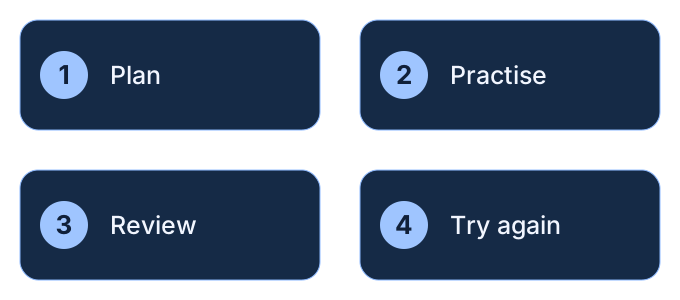
Choose study periods that fit your existing commitments. Give each period a single purpose, such as understanding an audio extract, explaining a viewpoint or improving the structure of a written answer. Leave time to review what happened. A completed exercise is more useful when you can explain why an answer worked and what you would change next time.
A sustainable Cambridge English preparation routine alternates focused skill work with practice under the conditions stated in your chosen task. Keep a short log with the date, material used, difficulty and next action. If your schedule changes, reduce the size of the activity and keep the review step. Use your own progress evidence to decide when to increase the challenge.
4. Practise with a purpose
Before starting, read the task and decide what a complete response must include. For receptive tasks, look for evidence that supports your answer instead of relying only on a familiar word. For productive tasks, identify the audience, purpose and required points before you speak or write. Use only the activities relevant to your selected examination and its current instructions.
During Cambridge English preparation, distinguish learning practice from a timed attempt. In learning practice you may pause to investigate a difficulty; in a simulation, follow the stated conditions consistently. Afterwards, record whether a mistake came from language knowledge, misunderstanding the instruction, losing concentration or running out of time. This distinction helps you choose a useful follow-up exercise rather than simply repeat the same paper.
5. Review your Cambridge English preparation evidence
Compare your response with the task requirements and the feedback available for that activity. Identify one thing that was effective, one recurring difficulty and one change to try. For a written response, revise a short passage and explain your choices. For a spoken response, listen to your recording and consider whether another person can follow the message without guessing.
Use Cambridge English preparation results as evidence for the next study decision. Compare attempts made under similar conditions and keep track of any support you used. A practice result is not an official certificate or a promise of a future score. Where a LingoLab assessment requires review and release, consult the result when it becomes available in your candidate workspace.
6. Prepare your device and workspace
Before an available online test, use a quiet place and check your internet connection, browser, headphones and microphone as appropriate. Read the instructions before starting a timed activity. Close distractions and make sure your device has enough power. If the task records your voice, check that microphone access is allowed and that your recording can be heard clearly.
Keep your Cambridge English preparation account details accurate and use an email address you control. Complete email verification, review the available access conditions and check the selected test before beginning. Your interface language helps you navigate; it does not translate the language being assessed. Keep useful feedback while studying, then use the dashboard archive to organise completed records when they are no longer needed in your active view.
7. Your next step in Cambridge English preparation
Return to the department or examination cards to compare the pathways that match your goal. Read the availability status and the information provided before selecting an action. When a test is available, use the account and access links to reach your candidate workspace. When a pathway is still being prepared, use this guide to organise study and consult its official format reference.
Bring your Cambridge English preparation plan back to a simple question: what will you practise next, and what evidence will show improvement? Write the answer, choose the activity and set a review date. For related language needs, the LSA GLOBAL links below introduce translation, localisation, editing and voice-over services. These services are separate from taking an official examination; choose only what supports your actual project.
8. Start Cambridge English preparation with a useful baseline
Choose a short task that represents the examination you are considering. Before you begin, record the task version, the conditions and what you intend to learn from it. Work independently for your first attempt, then look at the explanation or marking guidance. Separate mistakes caused by unfamiliar language from mistakes caused by misunderstood instructions. This distinction matters: rereading a question can solve one problem, while another needs several weeks of vocabulary work. A baseline is a starting observation, not a prediction of an official result. If a task is far above your current ability, choose a more manageable activity before repeating it.
Keep the baseline for Cambridge English preparation small enough to review carefully. Write three notes: something you completed confidently, something you could complete with support, and something you could not yet complete. Add one example to each note. These examples help you choose your next activity and explain your needs to a teacher. Avoid comparing scores from different versions or marking scales as though they were identical. A useful comparison uses a similar task, comparable conditions and a clear record of what changed between attempts.
9. Make reading and listening practice more precise
For Cambridge English preparation, first check which receptive skills your chosen version actually assesses. When reading is relevant, practise locating the evidence for an answer and identifying the words that change its meaning. Negatives, dates, comparisons and the writer's viewpoint can matter as much as unfamiliar vocabulary. Explain why a tempting alternative is unsupported. After the task, collect a few useful expressions in context instead of copying every unknown word. This creates a manageable review list and helps you notice the same expressions in later texts. Use the official instructions to distinguish permitted reference materials from support used only during ordinary study.
Where listening is assessed, separate understanding from memory. During study, compare what you heard with a transcript when one is legitimately available, then listen again to the difficult passage. Note whether the obstacle was speed, pronunciation, an unfamiliar expression or losing track of the question. Later, practise with the playback conditions stated for the selected examination. Repeated listening can be useful for learning, but a repeatedly replayed exercise is not comparable with an attempt completed under restricted playback. Record the conditions honestly in your study notes.
10. Develop clear written and spoken responses
Use Cambridge English preparation to practise communicating a specific message to a specific audience. If writing is assessed, identify the task's purpose before drafting: are you explaining, describing, requesting, comparing or arguing? Make a brief plan and check that each paragraph contributes to that purpose. Review task coverage separately from grammar so that a well-written answer does not overlook a required point. Keep a short list of recurring corrections and apply it to the next response. Do not memorise a complete answer and force it into a task that asks something different. Follow the relevant official format for length and response style.
If speaking is assessed, practise producing an understandable response without writing a full script first. Record a short rehearsal, listen once for meaning and once for delivery, and select one improvement for another attempt. Notice pauses, unclear connections and places where a simpler expression would communicate better. Interaction tasks may also require listening and responding to another person; a solo recording cannot reproduce every aspect of that experience. Ask for appropriate human practice when needed. Your aim is to improve the skills required by the chosen pathway, not to impose a four-module pattern on every examination.
11. Turn Cambridge English preparation feedback into the next action
After a practice task, read feedback alongside your actual answer. Choose the most consequential issue first: an unanswered instruction, a misunderstanding of a text, an unclear argument or a recurring language error. Describe the issue in your own words, then make a small correction that demonstrates understanding. If you cannot explain a suggested correction, ask a teacher or consult a reliable reference. Copying a polished answer without understanding it can make the next independent attempt just as difficult. Keep your notes concise enough to use during the following week rather than building a long list that you never revisit.
For each cycle of Cambridge English preparation, choose one transfer task: a new question that requires the same skill in a different context. Complete it without looking at the previous model answer, then compare the result. This checks whether the improvement carries over. Automated feedback can suggest useful patterns, but it may misread meaning, task requirements or a recording. Treat it as learning support and use an available review route when a result seems inconsistent. LingoLab preparation results do not replace the examination owner's official assessment, certificate or decision.
12. Plan four manageable weeks of Cambridge English preparation
In your first week, confirm the examination version, review its official information and complete your baseline task. In the second week, focus on two weaknesses that have the greatest effect on understanding or communication. In the third week, combine the practised skills in a longer activity or a sequence of relevant tasks. In the fourth week, repeat a comparable task under clearly recorded conditions and review what improved. This is an adaptable study example, not a promise that any examination can be prepared for in four weeks. Repeat or extend a stage when your starting level or available time requires it.
Fit Cambridge English preparation around the time you can reliably protect. A short session might include a few minutes of preparation, one focused activity and enough time to examine the result. A longer session can include a timed rehearsal, but it still needs review afterwards. Leave room for rest and for unexpected commitments. When a week does not go to plan, adjust the next activities rather than abandoning the whole schedule. A teacher can help you decide whether a difficulty calls for more language development, a different practice method or a more realistic examination date.
13. Check your next decision before booking or buying
Before paying for access connected with Cambridge English preparation, read the current offer carefully. Check the department, examination pathway, level or target, available modules, access period and included correction route. A public guide helps you explore a subject; it does not mean that every related test is already available inside LingoLab. Use the availability information and ask a specific question if an offer is unclear. Keep the order confirmation and the terms that apply to your purchase. The interface language is a navigation preference, so selecting French menus, for example, does not by itself select a French examination or change an existing purchase.
Before an official booking, verify the accepted examination and result with the receiving institution. Check the examination owner's current registration procedure, identification requirements, available arrangements and reporting timetable. Those details can depend on the version, location and receiving organisation. LingoLab does not register you for an official examination merely because you use a preparation page or complete a test. Bring together your evidence of progress, remaining difficulties and practical constraints, then decide whether to continue studying, request advice or book directly through the appropriate official channel.